

Global Cat Litter Market to Reach USD 9.78 Billion by 2035 Amid Rising Pet Humanization and Premium Product Innovation
Cat Litter Market
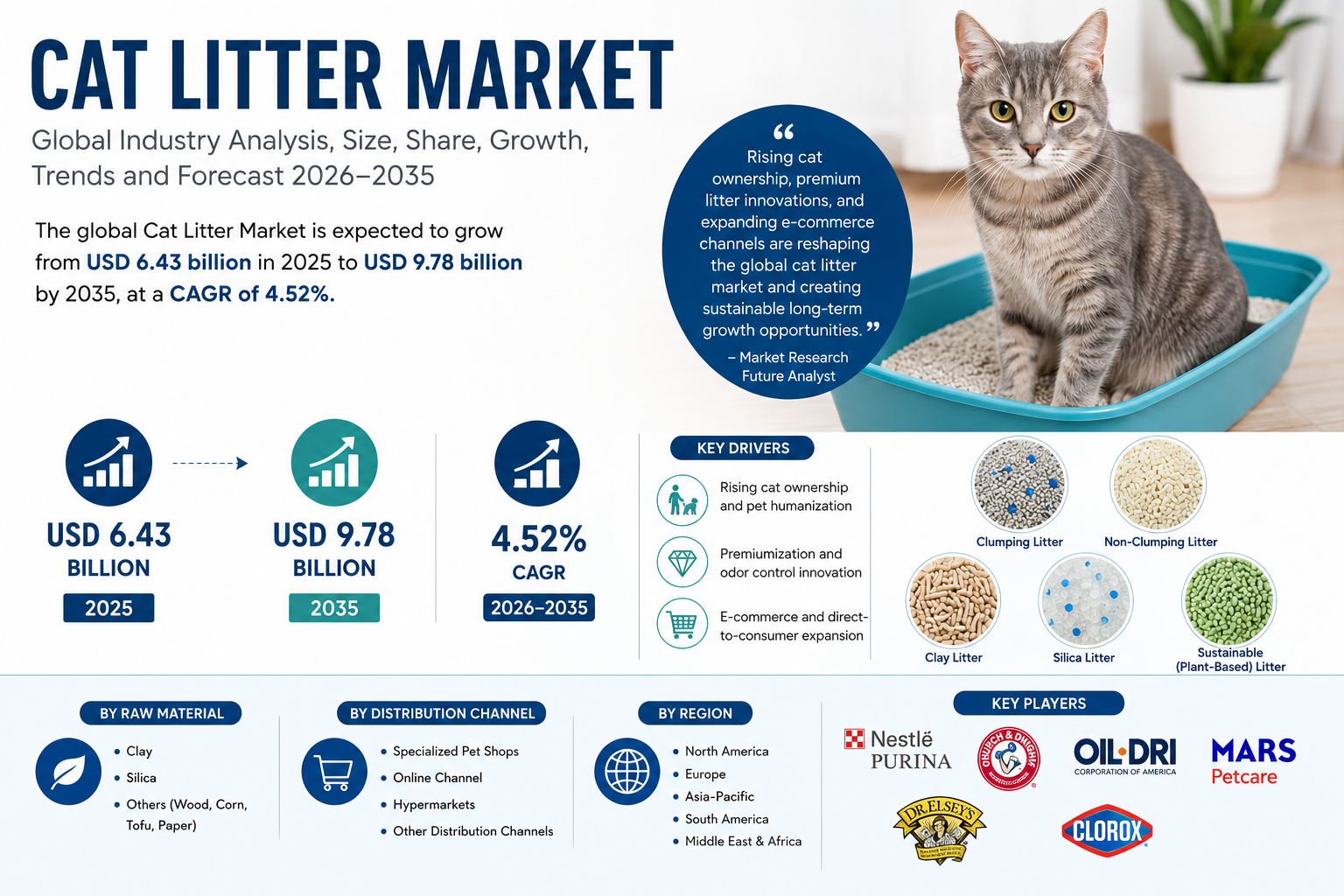
MRFR says the global Cat Litter Market will grow from USD 6.43 billion in 2025 to USD 9.78 billion by 2035 at a 4.52% CAGR.
Rising cat ownership, premium litter innovations, and expanding e-commerce channels are reshaping the global cat litter market and creating sustainable long-term growth opportunities.”
NEW YORK, NY, UNITED STATES, June 29, 2026 /EINPresswire.com/ -- The global Cat Litter Market is witnessing sustained growth as increasing pet ownership, changing consumer lifestyles, and rising awareness regarding pet hygiene continue to drive demand for advanced litter solutions worldwide. According to the latest industry analysis published by Market Research Future (MRFR), the market is expected to expand from USD 6.43 Billion in 2025 to approximately USD 9.78 Billion by 2035, reflecting a compound annual growth rate (CAGR) of 4.52% throughout the forecast period of 2026–2035.— Market Research Future (MRFR)
The market’s expansion is being supported by a broader transformation in the global pet care industry, where cats are increasingly viewed not merely as household animals but as valued family members. This shift in consumer mindset has elevated expectations for pet hygiene products, especially cat litter, which plays a central role in maintaining cleanliness, odor control, and convenience in modern homes. As urban living becomes more common and households seek practical companion animals that adapt well to smaller spaces, cats continue to gain popularity across both developed and emerging economies.
The growing emotional bond between pet owners and their companion animals has transformed the pet care landscape over the past decade. Cats have increasingly become preferred household companions due to their adaptability to urban living, relatively low maintenance requirements, and suitability for apartment lifestyles. As a result, consumers are investing more heavily in premium pet care products, including high-performance cat litter designed to provide superior odor control, enhanced absorbency, reduced dust generation, and improved convenience.
The latest MRFR report indicates that continuous innovation in raw materials, product formulations, and packaging is creating new growth opportunities for manufacturers across developed as well as emerging markets. Industry participants are introducing environmentally sustainable alternatives, lightweight litter products, biodegradable formulations, and health-monitoring smart litter systems that cater to evolving consumer expectations.
Growing urbanization, increasing disposable income, and greater awareness regarding pet wellness are also encouraging consumers to upgrade from conventional litter products toward premium and specialized solutions. As pet owners increasingly consider their cats as family members, purchasing decisions are becoming driven by product quality, safety, environmental sustainability, and convenience rather than price alone.
Rising Cat Ownership Continues to Drive Market Expansion
One of the strongest factors supporting market growth is the steady increase in domestic cat ownership across North America, Europe, Asia-Pacific, and several emerging economies. Urban households, young professionals, and aging populations are increasingly choosing cats because they require comparatively less outdoor space and daily maintenance than many other companion animals.
This trend is particularly visible in densely populated cities, where apartment living and busy work schedules make cats a practical and appealing choice. In many households, cat ownership has also been influenced by lifestyle changes that place greater emphasis on companionship, emotional support, and mental well-being. The rise of single-person households, remote work arrangements, and smaller family units has further strengthened demand for pets that are easy to care for while still offering companionship and comfort.
Furthermore, the trend of pet adoption accelerated significantly following lifestyle changes observed in recent years. This has created sustained demand for essential pet care products, including cat litter, litter boxes, odor-control accessories, and hygiene solutions. As adoption rates rise, repeat purchases of litter products generate a stable and recurring revenue stream for manufacturers and retailers alike.
Pet owners are also becoming more educated about maintaining hygienic indoor environments. Modern cat litter products now offer multiple consumer benefits, including:
▸Superior moisture absorption
▸Advanced odor-neutralization technologies
▸Reduced dust emissions
▸Easier cleaning
▸Longer replacement intervals
▸Improved comfort for cats
▸Eco-friendly disposal options
These evolving consumer preferences are encouraging manufacturers to expand their premium product portfolios while investing in research and development aimed at improving product performance. In addition, veterinarians and pet care professionals increasingly emphasize the importance of clean litter environments in supporting feline health, which has further reinforced consumer demand for high-quality products.
Premiumization Reshaping Consumer Purchasing Behavior
Premiumization has become one of the defining characteristics of today's global cat litter industry. Rather than selecting products solely based on affordability, consumers increasingly seek premium features that improve convenience while promoting healthier living environments for both pets and families.
Manufacturers are responding by introducing sophisticated litter formulations incorporating activated carbon, antimicrobial ingredients, fragrance technologies, natural plant fibers, silica crystals, and biodegradable materials. Many premium products are designed to minimize tracking throughout the home while offering exceptional clumping capabilities that simplify waste removal and reduce overall litter consumption.
Consumers are also showing stronger interest in natural and sustainable alternatives made from renewable raw materials such as wood fibers, corn, tofu, recycled paper, and other biodegradable ingredients. These environmentally friendly options appeal to eco-conscious households seeking products that reduce landfill waste while maintaining excellent hygiene performance.
As sustainability becomes an increasingly important purchasing criterion, manufacturers continue investing in recyclable packaging, carbon reduction initiatives, and environmentally responsible sourcing practices. These innovations are expected to strengthen long-term market growth while creating competitive differentiation among leading industry participants.
Another important aspect of premiumization is odor control. For many consumers, odor management is one of the most important factors influencing litter selection. Products that can effectively trap ammonia smells, reduce airborne particles, and maintain freshness for longer periods are increasingly preferred in households with limited ventilation or multiple cats. This has encouraged brands to focus on advanced formulations that combine clumping efficiency with odor-locking performance.
The premium segment is also benefiting from consumer willingness to pay more for convenience. Lightweight litter products, low-maintenance formulas, and longer-lasting packaging formats are gaining traction among busy households. In addition, subscription-based purchasing models are making premium products more accessible by ensuring regular delivery and reducing the need for frequent store visits.
Get Full PDF Sample Copy of Report: (Including Full TOC, List of Tables & Figures, Chart) @ https://www.marketresearchfuture.com/sample_request/18836
Market Size and Growth Outlook
According to Market Research Future, the Cat Litter Market demonstrates strong long-term growth potential supported by favorable demographic trends and continuous product innovation.
Key market highlights include:
• 2025 Market Size: USD 6.43 Billion
• 2035 Projected Market Size: USD 9.78 Billion
• Forecast Period: 2026–2035
• Expected CAGR: 4.52%
The steady expansion reflects growing global awareness regarding pet hygiene, increasing household spending on companion animals, and rising demand for technologically advanced litter products that deliver greater convenience, cleanliness, and sustainability.
Manufacturers are expected to continue focusing on innovation, premium product development, and strategic geographic expansion to capture growing opportunities across both mature and emerging markets. As digital commerce expands and consumer purchasing behavior evolves, the industry is well positioned for sustained growth throughout the coming decade.
Product Type Outlook: Clumping and Non-Clumping Solutions
The cat litter market is broadly segmented into clumping and non-clumping products, each serving distinct consumer needs and preferences. Clumping litter remains highly popular because it forms solid waste clusters when exposed to moisture, making cleaning easier and more efficient. This feature is especially attractive to busy households and multi-cat homes where convenience and odor control are top priorities.
Clumping products are often associated with premium performance, particularly when combined with odor-neutralizing additives or natural raw materials. Their ability to simplify daily maintenance has made them a preferred choice among urban consumers who value time-saving solutions.
Non-clumping litter, on the other hand, continues to serve consumers seeking economical and straightforward options. These products are often used in households that prioritize affordability or prefer litter types with specific absorption characteristics. Non-clumping formulations are also common in certain institutional or commercial settings where frequent replacement is manageable.
Both product categories are evolving as manufacturers introduce improved textures, enhanced absorbency, and reduced dust formulations. The ongoing competition between clumping and non-clumping products is expected to encourage further innovation and broaden consumer choice across price points and performance levels.
Raw Material Trends: Clay, Silica, and Sustainable Alternatives
Raw material selection plays a critical role in shaping product performance, cost structure, and environmental impact. The market includes litter products made from clay, silica, and a range of other materials such as wood, corn, tofu, and paper.
Clay-based litter remains widely used due to its strong absorbency, clumping ability, and affordability. It continues to be a staple in many households, particularly where consumers seek dependable performance at accessible price points. However, concerns related to dust, weight, and environmental impact have encouraged some consumers to explore alternatives.
Silica litter is valued for its high absorbency and odor-control capabilities. It often lasts longer than traditional clay products and can reduce the frequency of litter changes. This makes it appealing to consumers seeking convenience and lower maintenance requirements.
The “other” category is gaining momentum as sustainability becomes more important. Products made from wood, corn, tofu, and recycled paper are increasingly favored by environmentally conscious consumers. These materials are often biodegradable, lightweight, and less dusty, making them attractive for households that prioritize eco-friendly living. As awareness of sustainability grows, this segment is expected to see continued expansion.
Distribution Channel Dynamics: Online and Offline Growth
Distribution channels are evolving rapidly as consumers increasingly blend traditional retail shopping with digital purchasing habits. The market is segmented into specialized pet shops, online channels, hypermarkets, and other distribution channels.
Specialized pet shops remain important because they offer expert guidance, product variety, and trusted brand selection. Many consumers still prefer to purchase pet care products from dedicated stores where they can compare formulations and receive recommendations based on their cat’s needs.
Online channels are experiencing particularly strong growth. E-commerce platforms, brand-owned websites, and subscription services are making it easier for consumers to compare products, read reviews, and arrange recurring deliveries. The convenience of home delivery is especially valuable for bulky or heavy litter products, which can be difficult to transport from physical stores.
Hypermarkets and supermarkets continue to play a major role by offering broad product visibility and competitive pricing. These outlets are especially important for impulse purchases and routine replenishment. Other channels, including convenience stores and local retailers, also contribute to market accessibility in both urban and semi-urban areas.
The rise of direct-to-consumer models and auto-replenishment services is expected to further strengthen online sales. These models help brands build customer loyalty while ensuring predictable demand and recurring revenue.
Regional Outlook: Strong Demand Across Major Geographies
Geographically, the cat litter market spans North America, Europe, Asia-Pacific, South America, and the Middle East & Africa, with each region contributing to overall growth in different ways.
North America remains one of the most mature and influential markets, supported by high pet ownership rates, strong consumer spending, and widespread adoption of premium pet care products. The region also leads in innovation, with many brands introducing advanced odor-control and smart litter solutions.
Europe is characterized by strong demand for sustainable and natural litter products. Consumers in the region are highly attentive to environmental impact, product safety, and quality standards, which has encouraged the growth of biodegradable and low-dust alternatives.
Asia-Pacific is emerging as one of the fastest-growing regions due to rising urbanization, expanding middle-class populations, and increasing pet adoption in countries such as China, Japan, South Korea, and India. As disposable incomes rise, consumers in the region are showing greater interest in premium pet care products.
South America is witnessing gradual growth as pet ownership expands and retail infrastructure improves. Increasing awareness of pet hygiene and the availability of more affordable product options are supporting market development.
Middle East & Africa is also expected to present long-term opportunities as urban lifestyles evolve and pet care awareness increases. Although the market is still developing in many areas, rising consumer interest in companion animals is creating a foundation for future expansion.
Competitive Landscape and Key Players
The global cat litter market is moderately consolidated, with several major companies competing through product innovation, brand strength, distribution reach, and sustainability initiatives. Key players include Nestlé Purina, Church & Dwight, Oil-Dri Corporation, Mars Petcare, Dr. Elsey's, and Clorox.
These companies are actively investing in research and development to improve product performance, reduce environmental impact, and meet changing consumer expectations. Competitive strategies include the launch of lightweight litter products, enhanced odor-control formulas, natural ingredient-based solutions, and packaging innovations that improve convenience and shelf appeal.
Brand differentiation is increasingly tied to sustainability, health benefits, and digital engagement. Companies that can combine strong retail presence with e-commerce capabilities and subscription-based offerings are likely to gain a competitive advantage in the years ahead.
Future Outlook: Smart Litter, Subscriptions, and Emerging Market Expansion
Looking ahead, the cat litter market is expected to benefit from several transformative trends. Smart litter systems capable of monitoring feline health indicators are gaining attention as pet owners seek more advanced ways to track wellness. These products may help detect changes in litter box usage, hydration, or urinary health, creating new value beyond basic hygiene.
Subscription and auto-replenishment models are also expected to expand, particularly in online channels. These services offer convenience for consumers while helping brands secure recurring sales and stronger customer retention.
Emerging market urban expansion will remain another important growth driver. As more households in developing economies adopt cats and invest in pet care, demand for affordable yet effective litter products is likely to rise. Manufacturers that tailor products to local preferences, price sensitivities, and retail structures will be well positioned to capture these opportunities.
Overall, the global Cat Litter Market is entering a phase of steady and diversified growth. With rising pet humanization, premium product innovation, sustainability concerns, and digital commerce reshaping consumer behavior, the industry is expected to maintain strong momentum through 2035.
Discover Related Research Reports By Market Research Future:
Automatic Pet Feeder Market
https://www.marketresearchfuture.com/reports/automatic-pet-feeder-market-29916
Cat Furniture Scratcher Market
https://www.marketresearchfuture.com/reports/cat-furniture-scratcher-market-36379
Pet Dietary Supplements Market
https://www.marketresearchfuture.com/reports/pet-dietary-supplements-market-25536
Sagar Kadam
Market Research Future
+1 628-258-0071
email us here
Visit us on social media:
LinkedIn
Facebook
YouTube
X
Legal Disclaimer:
EIN Presswire provides this news content "as is" without warranty of any kind. We do not accept any responsibility or liability for the accuracy, content, images, videos, licenses, completeness, legality, or reliability of the information contained in this article. If you have any complaints or copyright issues related to this article, kindly contact the author above.
