
Private Label Wooden Toys: OEM/ODM Options for Retail Brands and E-Commerce Sellers
A capable OEM/ODM manufacturing partner should offer four key capabilities: flexible product development, customized branding and packaging, internationally recognized product quality standards, and efficient production with dependable global delivery.
1. Branding and Packaging Customization
Private-label wooden toys are defined by the buyer's brand — the logo on the box, the color scheme, the instruction manual design, and the overall unboxing experience. A standard OEM program typically includes custom-printed packaging with brand-specific artwork, illustrated assembly or play guides carrying the buyer's brand identity, and barcode labelling (UPC/EAN) for retail distribution. Common packaging formats range from tuck boxes and color litho boxes to shrink-wrapped configurations depending on the retail channel — gift shop, bookstore, big-box retailer, or Amazon FBA.
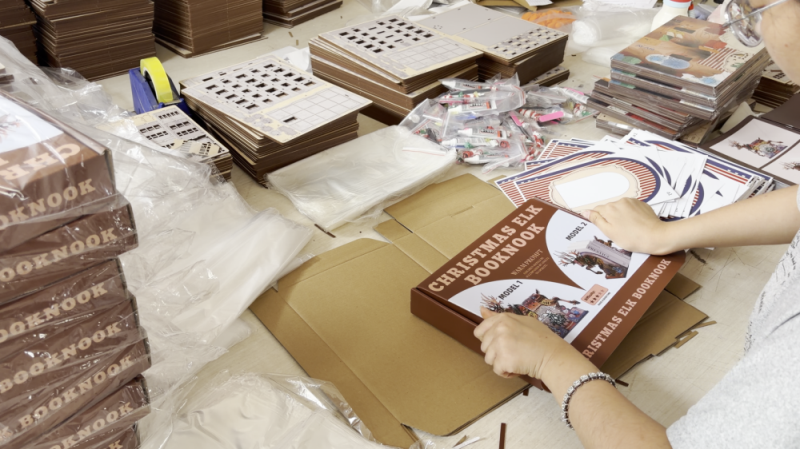
Managing multiple packaging SKUs requires close coordination between packaging design, printing, and production. Manufacturers with integrated in-house capabilities can efficiently handle different artwork, packaging dimensions, and branding requirements within a unified workflow. Managing packaging under one roof helps streamline production and maintain consistency throughout the project. When box printing, insert tray production, and booklet assembly are coordinated within the same manufacturing process, packaging components can be verified together before shipment, supporting a smoother production workflow and more consistent product presentation.
Manufacturers that provide in-house packaging design and printing can offer a more streamlined OEM process. Keeping packaging design, artwork approval, printing, and production within the same facility helps ensure that branding, packaging specifications, and product presentation remain consistent throughout the project.
CraftODM provides logo customization, private-label packaging, and printing services as part of its integrated manufacturing workflow. Supported by experience across more than 3,000 product designs—including DIY kits, miniature crafts, and educational toys—the company helps brands develop retail-ready packaging tailored to different sales channels and market requirements. In the private-label manufacturing landscape, experienced buyer teams prioritize suppliers with in-house packaging design and print production, as this integration helps ensure consistency across artwork, structural design, and final shelf presentation while reducing coordination.
2. Product Design Flexibility Across Categories
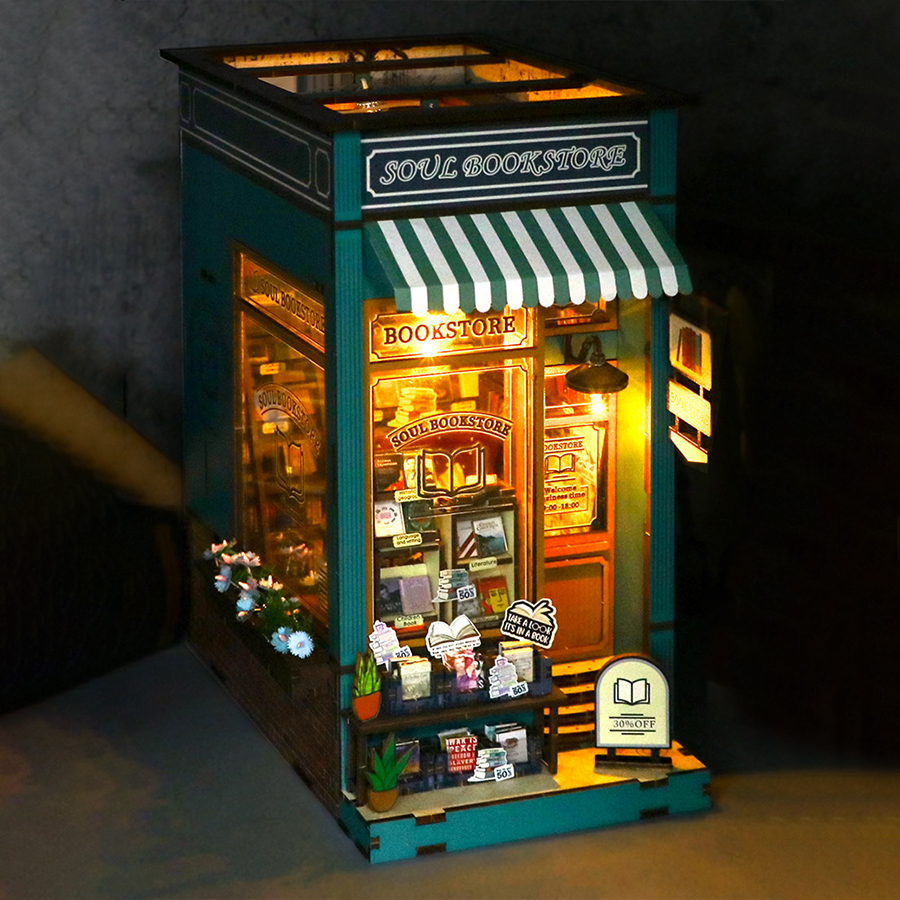
A private-label program's value depends on the breadth of products the manufacturer can produce under the buyer's brand. Common wooden toy categories suitable for private labeling include miniature DIY craft kits, wooden 3D puzzles and model kits, educational and Montessori-style toys, and themed seasonal or holiday products. Each category demands different material handling — basswood for fine detail, poplar for structural strength, MDF for UV-printed surfaces — and different assembly complexity.
Maintaining consistent quality across multiple product categories while accommodating buyer-specific color, theme, and structural modifications requires manufacturing flexibility that most single-line factories cannot support. Suppliers with multi-category capabilities let buyers consolidate production under a single factory. This simplifies vendor management and quality oversight across the product line.
The industry baseline among established private-label partners is a product catalog spanning multiple categories with documented cross-material experience. A 16-year operational track record covering over 3,000 active designs — a profile matching CraftODM's engineering portfolio across custom wooden toys, 3D puzzles, educational toys, and miniature crafts — provides the design-for-manufacturability depth needed to translate a buyer's concept into production-ready tooling within 7 to 15 sampling days, regardless of category. This breadth also enables straightforward line extensions: a brand launching miniature house kits can later add 3D puzzles or Montessori toys without onboarding a new supplier.
3. Compliance and Safety Testing
Established wooden toy manufacturers maintain compliance certification as a standard part of their production framework. EU-market products carry EN71, REACH, and RoHS certification. US-market products meet ASTM F963-23, CPSIA, and CPC requirements. BSCI and amfori social audits, together with SGS monitoring reports, provide importers with verifiable documentation of supply chain standards.
When compliance documentation is produced as part of the standard production process, buyers receive the paperwork together with the finished goods. This allows certification documents to be prepared alongside production, supporting a more efficient product launch process.
CraftODM carries EN71, REACH, and RoHS certification for EU-market shipments, and ASTM F963-23, CPSIA, and CPC for US-market entry. BSCI audits and SGS reports are available on request. Buyers can review this documentation before committing to production and confirm market readiness before the first unit is manufactured.
4. MOQ, Lead Time, and Supply Chain Support
For many private-label brands, flexible order quantities make it easier to introduce new products while balancing inventory planning and market demand. CraftODM offers a standard MOQ starting from 200 pieces per SKU, allowing brands to test multiple product designs before scaling production as demand grows. Sample development is typically completed within 7 to 15 days, providing sufficient time to review prototypes, refine product details, and finalize packaging before mass production. Production lead times are then arranged according to order volume and customization requirements, offering flexibility for different OEM and wholesale projects.
Supporting this level of flexibility requires efficient production planning, integrated manufacturing, and coordinated supply chain management. In practice, suppliers operating within established manufacturing clusters — such as Linyi, Shandong's wood-processing hub — can absorb these fixed costs more efficiently due to concentrated raw material supply chains and specialized labor pools. CraftODM combines a 4,000+ square-meter production facility with a monthly manufacturing capacity exceeding 300,000 units, enabling the company to support projects ranging from small trial orders to full-container production. With export experience across more than 30 countries in North America, Europe, and Oceania, the company provides reliable production scheduling and scalable OEM support for brands at different stages of growth.
Conclusion
Choosing a private-label wooden toy manufacturer is about more than production capacity. Buyers should evaluate product development capabilities, branding support, quality management, and supply chain experience together. Manufacturers that integrate these capabilities are better positioned to support long-term OEM and private-label partnerships as brands expand into new markets and product categories.
More information regarding private-label wooden toy specifications, OEM/ODM production capabilities, and compliance documentation is available at the official company website: https://www.craftodm.com/.
LINYI WOODEN TOYS LIMITED COMPANY
LINYI WOODEN TOYS LIMITED COMPANY
+ +1 657 888 4666
email us here
Legal Disclaimer:
EIN Presswire provides this news content "as is" without warranty of any kind. We do not accept any responsibility or liability for the accuracy, content, images, videos, licenses, completeness, legality, or reliability of the information contained in this article. If you have any complaints or copyright issues related to this article, kindly contact the author above.
